2025 11 06
When “URCYL” Becomes a Global Standard
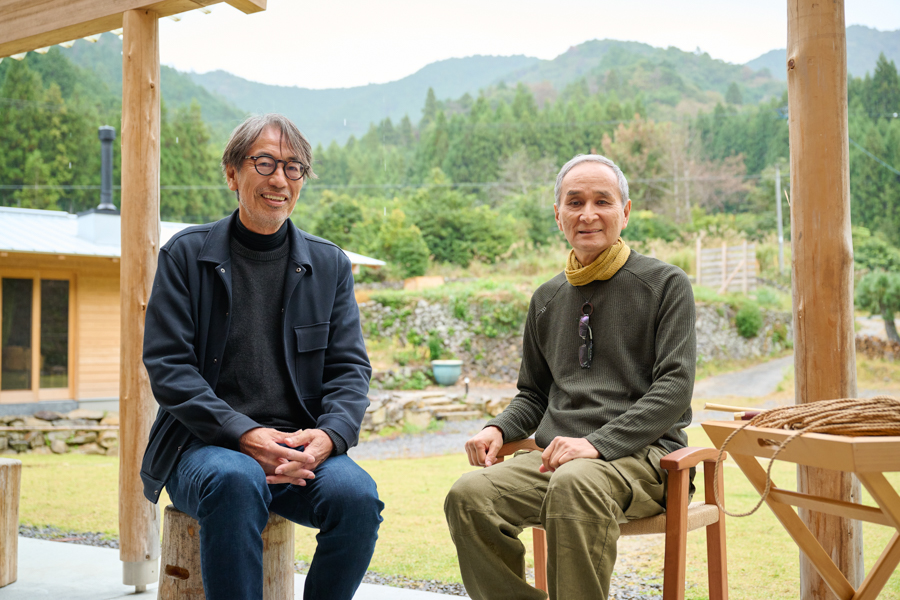
In October 2025, a dialogue between two leading figures took place in Okazaki City, Aichi Prefecture. The participants were Mineaki Saito and Atsushi Obara.*¹ Both are engaged in initiatives rooted in Japan’s satoyama culture and regional industries. Through their conversation, the potential of URCYL, a natural material made from URUSHI and wood, came into focus.
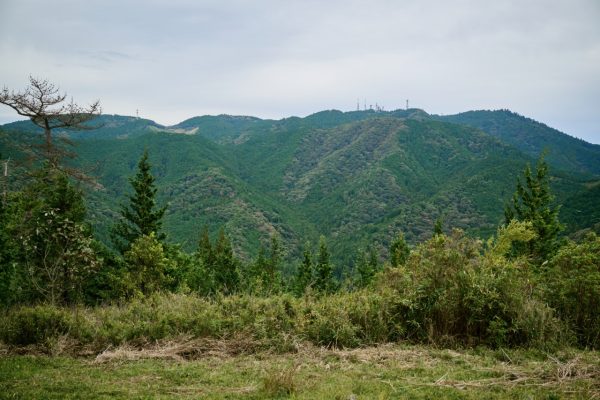
The two met for the first time that day, in the middle of the forest. At the summit of Mount Ameyama in Okazaki City lies a forest restoration site that Obara has been working on since 2011. “This place feels wonderful,” Saito mentioned, standing in a natural forest where a diverse array of trees grow. Known as Angel Forest, the site began with vegetation surveys, followed by the collection of acorns from konara and kunugi oak trees, which were then nurtured together with local children. Trees stretch skyward, sunlight filters gently through the leaves, and the rustling of foliage creates a soothing soundscape. “On the other hand,” Saito continued, “artificial forests planted with cedar made me feel uneasy.” Forests developed solely for economic efficiency seemed detached from environments meant for living. Since ancient times, the Japanese people have crafted tools essential to daily life from mountain resources such as URUSHI and timber. Eventually, the Industrial Revolution transformed the world, capitalism rose to prominence, and mass production accelerated in the postwar era.
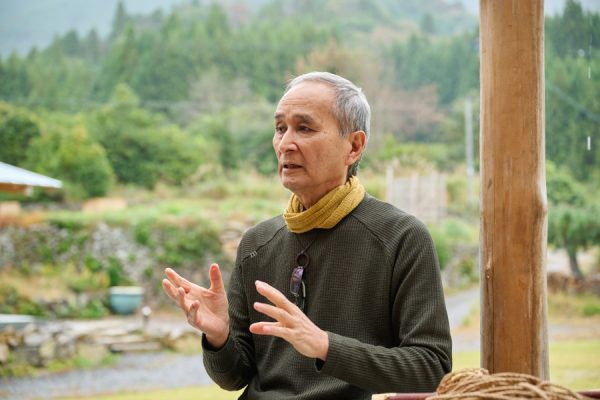
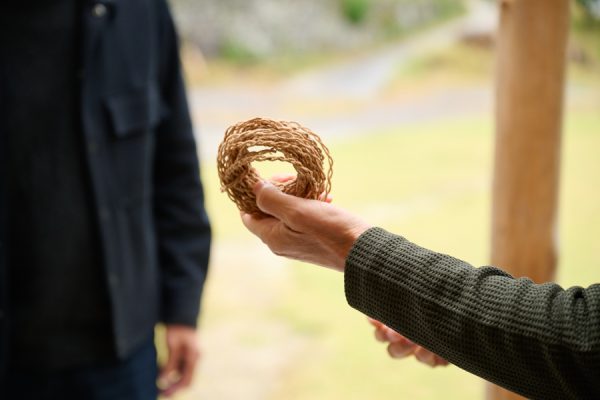
“Today’s highly optimized civilization is often considered the most advanced,” Saito reflected, “but we must question whether this path of development is truly good.” He wondered whether materials that should never have been used are now commonplace. Walking through natural and artificial forests prompted him to reconsider the very notion of progress. Obara, through his work in the forest, encountered natural materials that are no longer commonly used. One example is a stool he developed using rope made from kōzo fibers, the raw material for traditional Japanese paper, combined with locally sourced wood and persimmon tannin. The result unites modern design with the warmth and subtle fluctuation inherent in natural materials. Simply choosing different materials can lead to a richer way of life. The stool embodies Obara’s message. “This is a place where ideas emerge. Nature holds countless useful resources, many of which will be essential for the future. I want to convey the potential of materials sourced from the mountains.” As they spoke of natural forests, both men appeared genuinely happy.
Both Saito and Obara once built their careers within Western-led capitalist systems. Those experiences ultimately led them to rediscover Japan’s unique spiritual culture and abundant natural environment.
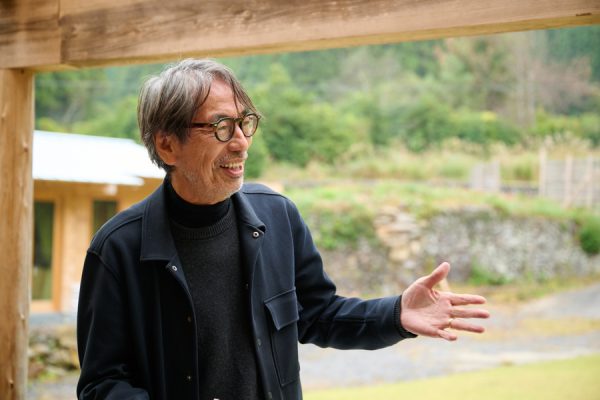
Consider Japan’s history and festivals. “Japan is the only country where festivals have been passed down for over a thousand years. Other cultural regions have repeatedly experienced invasion and destruction. The same applies to family businesses passed down through five, six, sometimes ten generations.” Well-versed in European culture, Saito believes Japanese culture is unparalleled. Japan’s climate, rich in mountains and water, fostered a people who can coexist with nature, giving rise to spiritual practices such as the tea ceremony and flower arrangement. The growing global interest in Japan reflects an unconscious recognition that “something fundamentally different from our own civilization exists here.” Shrines and ancient roads invite reflection on what kind of world truly brings happiness.
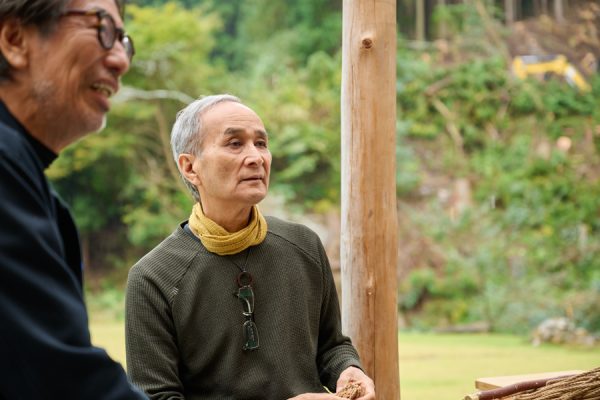
“Isn’t it possible to have an economic model rooted in the depth of Japanese culture?” Saito and Obara ask in unison. With such cultural wealth, Japan bears a responsibility to propose an alternative balance between economy and environment to the world. One answer is URCYL.“ELEMUS is presenting URUSHI, a traditional craft, as a new global resource to be proud of. If it becomes a company recognized internationally, others will realize that Japan is not something to discard, and will rediscover natural materials.” Rather than imitating Western companies, proposals grounded in Japan’s own values can create new global standards.
“And we believe we must not pass this world on to the next generation as it is.” The thoughts and determination shared by the two men align closely with URCYL’s mission. When URCYL becomes a global standard, a future in which environment and economy are in harmony will unfold. Bridging Japan and the world, past and future, culture and industry, their dialogue reveals the diverse values inherent in natural materials.
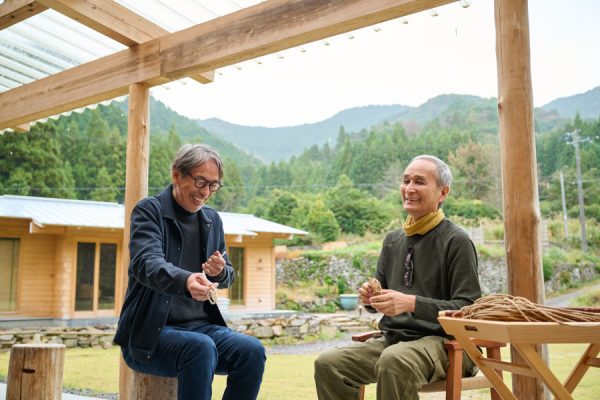
*¹ Mineaki Saito: Former Vice President of Hermès France; currently Representative Director of Scenery International, promoting Japan’s satoyama culture and craftsmanship.
Atsushi Obara: Former architectural consultant; founder and Chairman of the nonprofit organization EARTH WORKER ENERGY.
Related news